From Morning Paper to Pocket Feed: How News Formats Changed
Morning paper to pocket feed changed how readers encounter news; learn to distinguish a bounded edition from a shifting stream and read each with context.
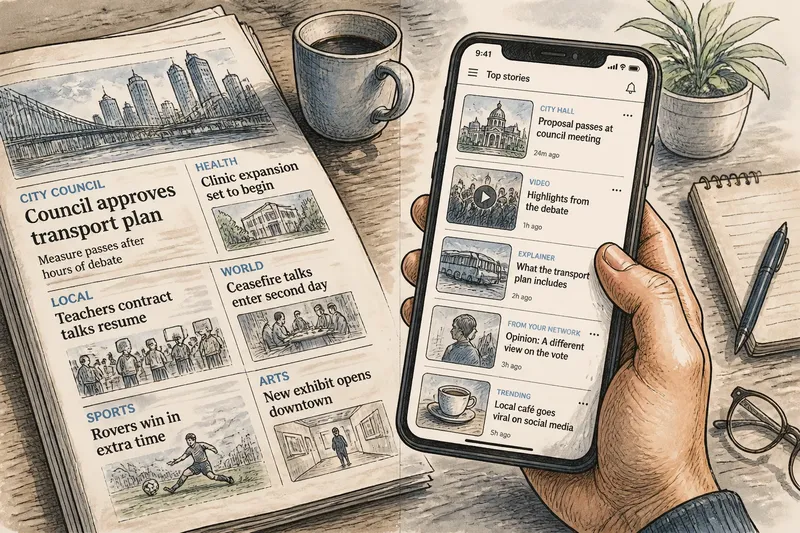
The common mistake is to treat a pocket feed as a morning paper compressed onto a phone. That can leave you reading a ranked sequence as if it were a complete collection, at the cost of missing which stories sit alongside one another and which do not. The shift from morning paper to pocket feed changed the shape of the reading session, not just the delivery method.
A print edition arrives as a gathered object: its pages stay in place while you read. A feed keeps offering items in an order that may change, so the reader has to supply a boundary—where to begin, what to open, and when to stop.
Morning paper and pocket feed
A newspaper edition makes its selection visible. You can scan the front page, turn to local news, and notice which topics share a section. The layout reflects editorial choices, but its pages give those choices a stable frame.
A digital feed instead presents a slice of a larger supply. A news app might place a publisher’s report beside a video, an explainer, or a link shared by another account. Their proximity on screen does not mean they share an author, purpose, or level of detail.
The difference is like a bowl of mail beside a moving delivery slot: one gives you a collection to sort, while the other keeps introducing items. Neither arrangement tells you which item best answers your question.
What the screen makes visible
In print, headlines and page placement remain still. In a feed, prominence can come from editorial selection, your settings, followed accounts, or a platform’s ranking. A story near the top may be new or relevant to your interests, but its position alone does not explain why it appears there.
That makes comparison harder. A reader looking at a paper can see several headlines at once; a reader scrolling may encounter those same subjects at different times, mixed with posts and media in other formats.
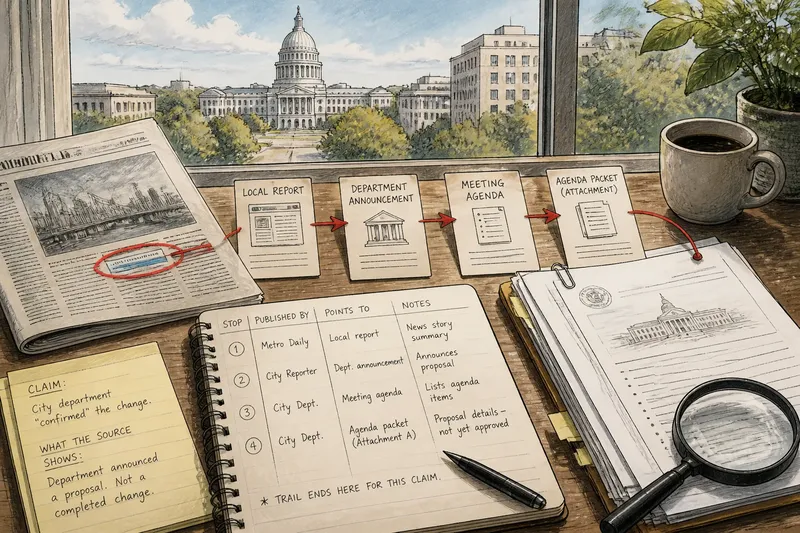
It helps to separate the publisher’s presentation from the platform carrying it. A publisher’s home page may have its own section order, while a social feed may surround a news link with comments and posts chosen by a separate system.
Reading a story’s changing shape
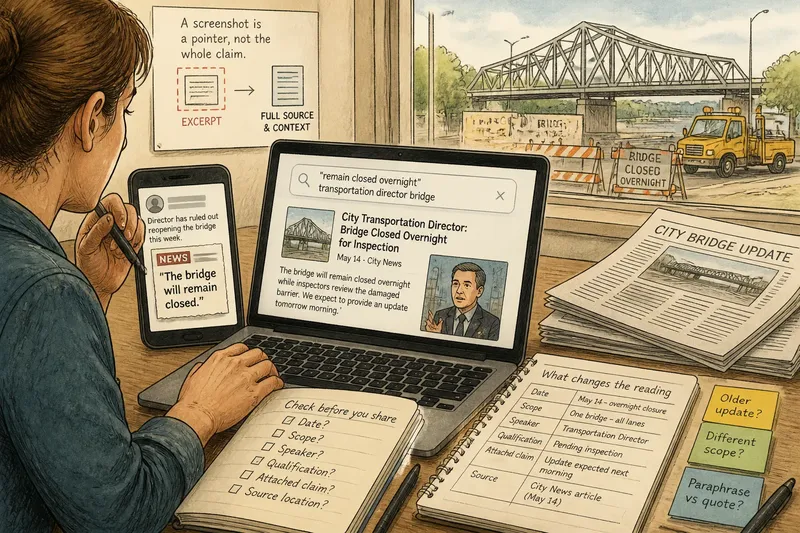
A digital article can remain at one address while its headline, text, or surrounding links change. Its first publication time and a later update time describe different moments, and a page may not make that distinction equally easy to see.
When you return to a story, look for an update note or a record of changes. If the page offers no such explanation, avoid assuming that the current wording is identical to what you saw earlier. A print copy, by contrast, preserves the edition as it was released, even if a later edition carries a different account.
This is not a contest over which medium is more reliable. Each leaves a different trace: the paper preserves a fixed issue, while the digital page can incorporate later material without giving the reader a new physical edition.
Choosing a useful reading session
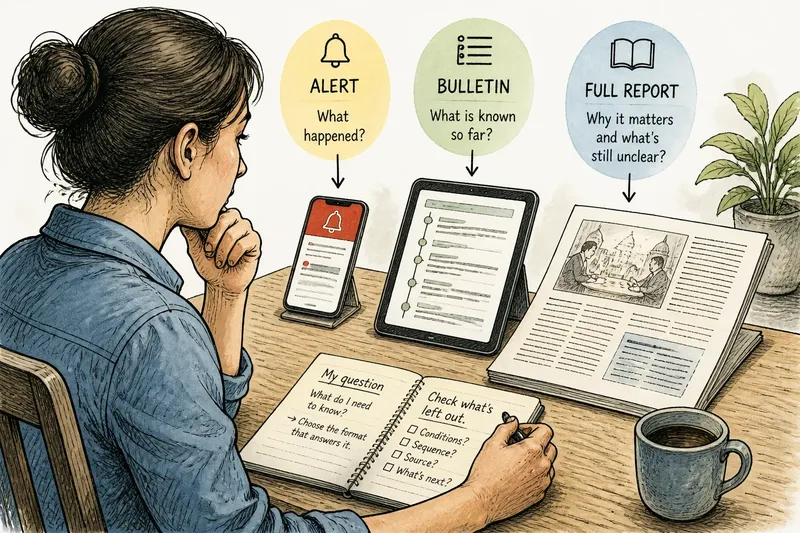
Use the format that fits the question you have. If you want to see how a publication has arranged several subjects, a section page or print edition can help. If you want to follow a developing event, a digital story may offer newer material, but its sequence still needs interpretation.
- Check the page type: If it is a live thread or social post, treat it as a sequence or reaction; if you need a connected account, open a report or explainer instead.
- Compare the timestamps: If publication and update times are both shown, note which came first; if only one is visible, read the page as a view from an uncertain point in the story.
- Inspect the surrounding items: If a section page shows related coverage, use it to see how the publisher groups the subject; if the feed mixes unrelated material, open the publisher’s page to restore that context.
- Notice what the headline promises: If it only states a new development, expect limited background; if you need causes or sequence, seek an article that explains them.
- Decide what remains unclear: If the basic event is enough for your purpose, stop there; if the significance is unsettled, look for a fuller account or a later update.
- Check whether a page changed: If an update note describes additions or corrections, read those changes; if no change history is available, avoid treating an earlier impression as the current wording.
Say you open a news app after a fictional city council meeting and see a short post saying a proposal passed. You note that it gives no detail about amendments, then open the publisher’s longer report, which describes the vote and the objections raised before it. The resulting picture is more useful for understanding the decision, though the short post may still serve as a quick notice of the outcome.
How do the formats differ?
Why does a digital feed feel urgent?
Feeds can place new items, notifications, and changing headlines in front of you throughout the day. That presentation may encourage another check even when the next item does not answer a new question.
Does a print edition contain more context?
Not automatically. A print edition lets you see a selected collection at once, while a digital article may link to background or incorporate later information; each can omit material the other makes easier to notice.
Why can a headline change online?
A publisher may revise a headline as a report develops or clarify what the article says. If the change affects your understanding, look for an update note and read the article itself rather than relying on a remembered headline.
When should you leave the feed?
Leave it when it no longer answers the question you came with, or when separate posts make the sequence harder to follow. A connected report, section page, or saved edition may offer a clearer view of the material you need.
Setting a reading boundary
A feed has no natural final page, so a useful session needs a purpose. Decide whether you are looking for the basic event, the publication’s broader coverage, or the way a story has changed. That choice can keep a notification from becoming an invitation to scroll without a clear reason.
For morning paper to pocket feed, the central difference is the boundary: print gives you a fixed issue, while digital delivery makes the sequence more open and changeable. Before you close the app, note what the page did and did not establish; that small distinction makes it easier to resume the story without confusing an update with the whole account.