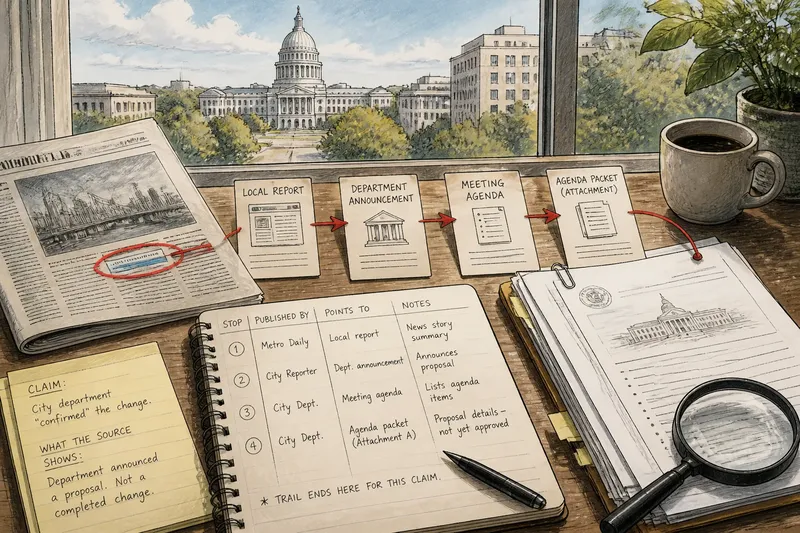
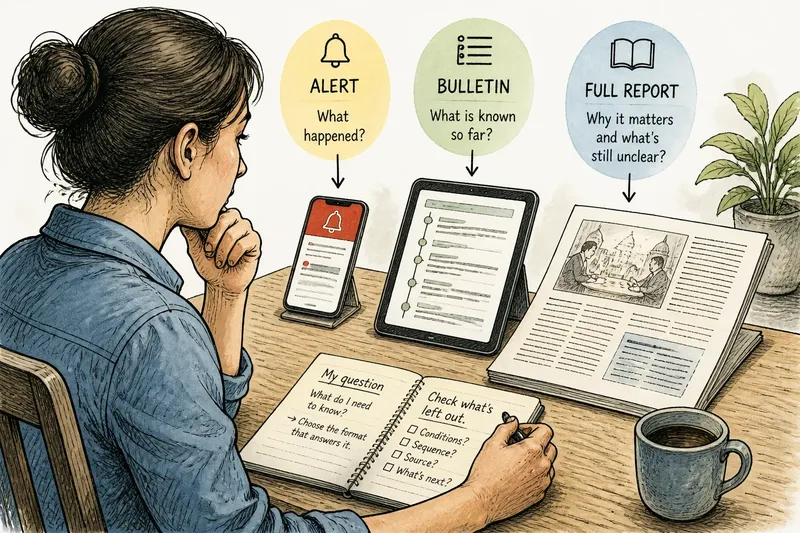
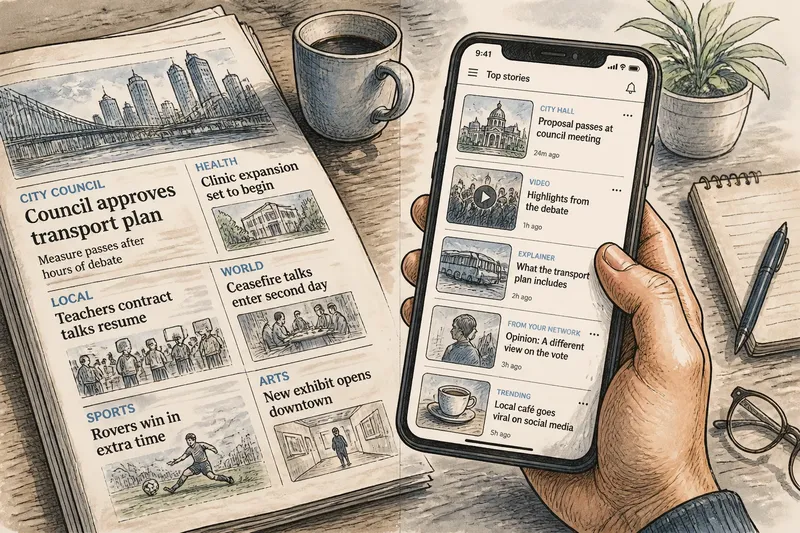
One Story, One Reading Window: A Weekly Follow-Up Routine
A weekly follow-up routine for one developing news story helps you record what changed, identify what remains unsettled, and stop checking updates all day.
The most common mistake with a developing story is reopening it whenever a notification or stray thought brings it to mind. A weekly follow-up routine replaces those scattered checks with one planned session, so you can spend less attention on repetition and keep a clear record of what still matters.
Set a fitting interval
Weekly is a starting point, not a rule for every story. Match the interval to the pace of the underlying situation and your reason for following it. A proposed policy or ongoing court case may allow a measured return; an immediate local emergency calls for current instructions from the relevant authority.
If you are curious but have no decision to make, a weekly session may be enough. If updates are frequent but do not affect you, check less often rather than treating every new headline as a demand. If you are personally affected, choose a deliberate schedule that fits the consequences and use a suitable official channel for urgent information.
Keep the scope to one continuing event, decision, or question. A narrow thread gives your attention somewhere to return without turning a reading habit into a general obligation to monitor every headline.
Match the routine to need
Decide how often to return by considering what you need from the story, not how often your feed mentions it.
- Curious, not affected: If the story helps answer a question you care about but requires no action, save one starting article and use a weekly session; if it has stopped adding useful context, widen the interval or pause.
- Waiting for a public decision: If an institution has announced a decision point, note who is responsible and what event is expected; if the date or status changes, update your next return point rather than treating commentary as a decision.
- Personally affected: If the story bears on an immediate choice or obligation, use the relevant official channel and set a timely check; if your need is only broader context, keep that separate from urgent instructions.
- Overloaded by updates: If alerts repeat familiar details, pause them and write down the specific development that would make you check again; if a concrete change affects you, return sooner through an appropriate source.
These choices can change as the story does. If a new development affects your responsibilities, revise the schedule; if the situation goes quiet, give it more space.
Keep a compact record
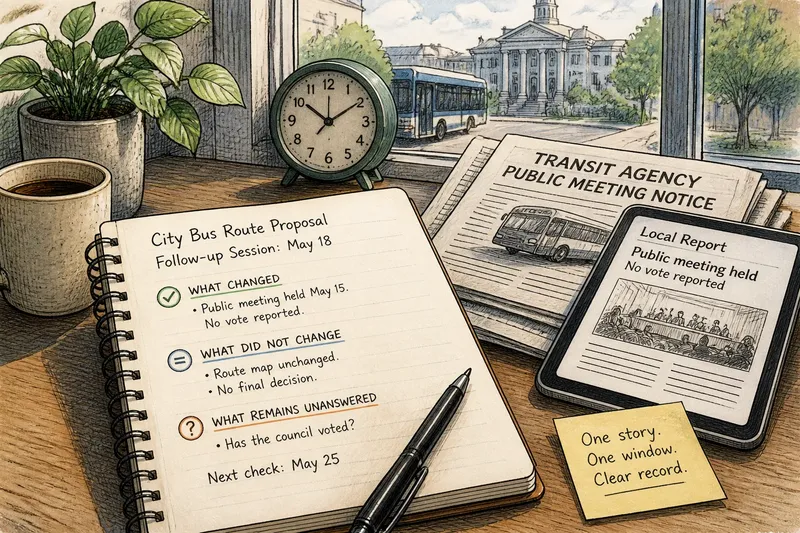
Use a paper notebook, a text file, or a notes app. Add the story name and session date, then make three short entries: what changed, what did not change, and what remains unanswered.
Record observable details rather than impressions. “The agency posted a revised timetable” is more useful than “the story is moving fast.” If you cannot tell whether a detail is new, mark it as unclear instead of presenting it as an update.
Say you are following a proposed change to a city bus route. At the start of a planned session, your note says the transit agency has scheduled a public meeting, the route map is unchanged, and the council has not made a final decision. You check the agency’s meeting notice and a local report, find that the meeting has occurred but no vote is reported, and update the record: meeting held, map unchanged, decision still open. The practical result is a clear next question—whether the council votes—rather than a vague sense that the story has moved.
A note is like a bookmark with a margin: it helps you return to the right place without pretending to contain the whole story. Keep a link only when it helps you revisit a particular detail; otherwise, the note can become another stream to maintain.
Run the reading session
Begin by rereading the previous note before searching. Carry its unanswered question into the session, then look for information that addresses it instead of following every related headline.
Choose a small, relevant set of material for the question at hand. For the bus-route example, that might be the agency’s meeting notice and a local report on what happened at the meeting. If the question concerns a court filing, a docket entry and reporting that explains the filing may be more useful than general commentary.
Close by recording only what changed, what did not, and what remains open. If nothing material changed, write that plainly and stop. An unchanged session is a reason to wait for the next planned return point, unless a concrete development affects a decision that cannot wait.
Questions for the routine?
How do I choose one story?
Choose a continuing event, decision, or question that you genuinely want to follow. If several headlines concern separate developments, keep only the thread that matters most to you and leave the others outside this note.
What counts as a meaningful change?
A meaningful change alters a known fact, the status of a decision, the people or institutions involved, or the next expected event. A fresh summary of familiar details may add context, but it does not automatically change the record.
How should I record unanswered questions?
Write a specific question, such as “Has the council voted?” rather than “What happens next?” A precise question gives your next session a purpose and makes it easier to recognize when an answer is still missing.
When should I return before the planned session?
Return sooner if a concrete development affects a choice or obligation that cannot wait. For immediate personal consequences, use the appropriate official channel rather than relying on a saved note or general news coverage.
Adjust or stop following
After several sessions, consider whether the record is helping you notice meaningful changes or merely preserving details you no longer need. If a decision has been made, mark the thread as settled for now; if it has stalled, widen the interval or stop until a specific event gives you a reason to return.
A weekly follow-up routine is a way to give one developing story a bounded place in your reading life. The main phrase, weekly follow-up routine, describes a simple practice: preserve the question that matters, record what changed, and choose the next event or date that would make the story worth reopening.